Small & tiny VALORANT crosshair codes
Compare tiny dots, compact pro layouts, and short-line crosshairs without covering distant targets.
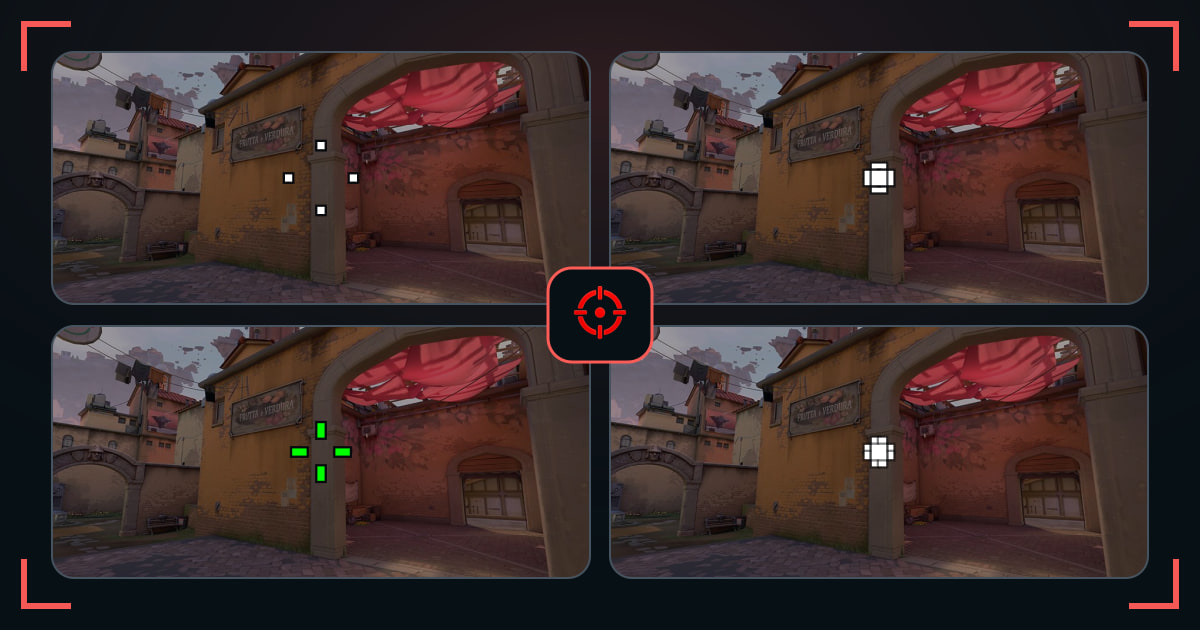
A small crosshair leaves more of the target visible and makes head-level placement easier to judge. The smallest VALORANT crosshair is not automatically the best one: it still needs to be easy to recover after a fast turn.
This collection separates three useful styles: tiny center dots for the cleanest view, short closed crosses for a stronger center, and open micro crosses that leave the head visible. Compare them on the same scene before changing thickness, gap, or color.
Pick the smallest crosshair you can still track
- Start with a short cross, then move to a tiny dot only if the center stays visible.
- Compare every shape at normal scale on the same map scene.
- Keep the smallest option you can find again immediately after looking away.
Small crosshair visibility checks
- Use full opacity before adding more size.
- Try cyan, green, or a thin outline when the center blends into a wall.
- Increase thickness by one step before making every line longer.
Common questions
Is a small crosshair better in VALORANT?
It can improve target visibility and precise placement, but only if you can still find it quickly during movement and utility.
What is the smallest VALORANT crosshair?
A one-pixel center dot is the smallest possible visual reference, but many players track a tiny four-line cross more reliably.
What is the difference between a small crosshair and a dot?
A dot uses one central mark. A small crosshair can use short lines around an open or closed center, giving your eyes more shape to track.
How do I make a small crosshair easier to see?
Try cyan or green, add a thin outline, or increase thickness by one step before making the whole shape larger.